
The warranty ends and the customer stops calling, with nobody at the dealership noticing. By the time that car turns up at another workshop, the relationship is already gone.
Dealerships that reach out first keep those customers.
Predicted service, new in ConnectedWorkshop, shows them who to call and when.
What the warranty does for a dealership
During the warranty period, return visits are close to automatic, because the manufacturer sets the intervals and often covers the cost. Then the warranty ends, none of that structure remains, and retention starts depending on what the dealership does. That makes the end of coverage the most critical moment in the aftersales journey.
Most dealerships still treat this moment as an afterthought. Reminders go out late and inconsistently, often after the customer has booked elsewhere, which is a symptom of a process nobody owns. At that point, the dealership is trying to recover a customer it could have contacted earlier. The customers who drift take future service revenue with them.
Loyalty depends on visibility
Loyalty after the warranty comes down to reaching the customer before the service is due. The dealership can focus its attention on customers who are approaching a service event, rather than sending the same reminder to everyone.
The hard part is knowing which vehicles need attention before the customer does, which makes it a data problem before it is a communication one. Nobody works that out by hand across a few thousand vehicles of different ages and service histories.
Turning the forecast into action
We built Predicted service inside ConnectedWorkshop to solve it. Instead of waiting for a booking, the workshop sees the work ahead. The view runs from three months out to a full year, and it splits by week or by month. Vehicles fall into three age segments, from the first four years through to everything past six. Because the oldest segment is the post-warranty population, it finally becomes visible.
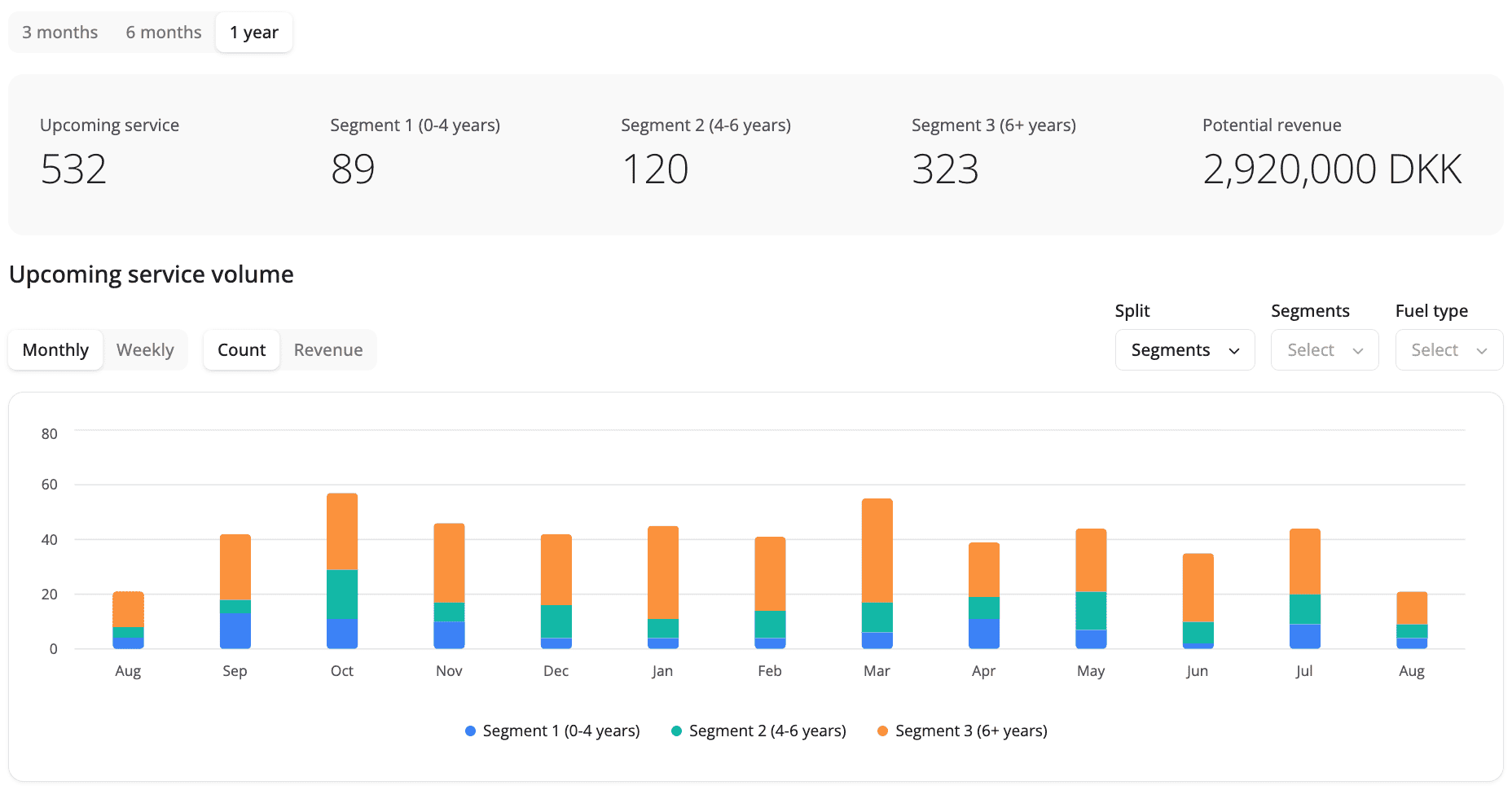
Split the same view by fuel type and the pattern separates cleanly. ICE and hybrid vehicles usually carry both an inspection and an oil change. EVs carry inspection only, so the oil change count drops to zero.
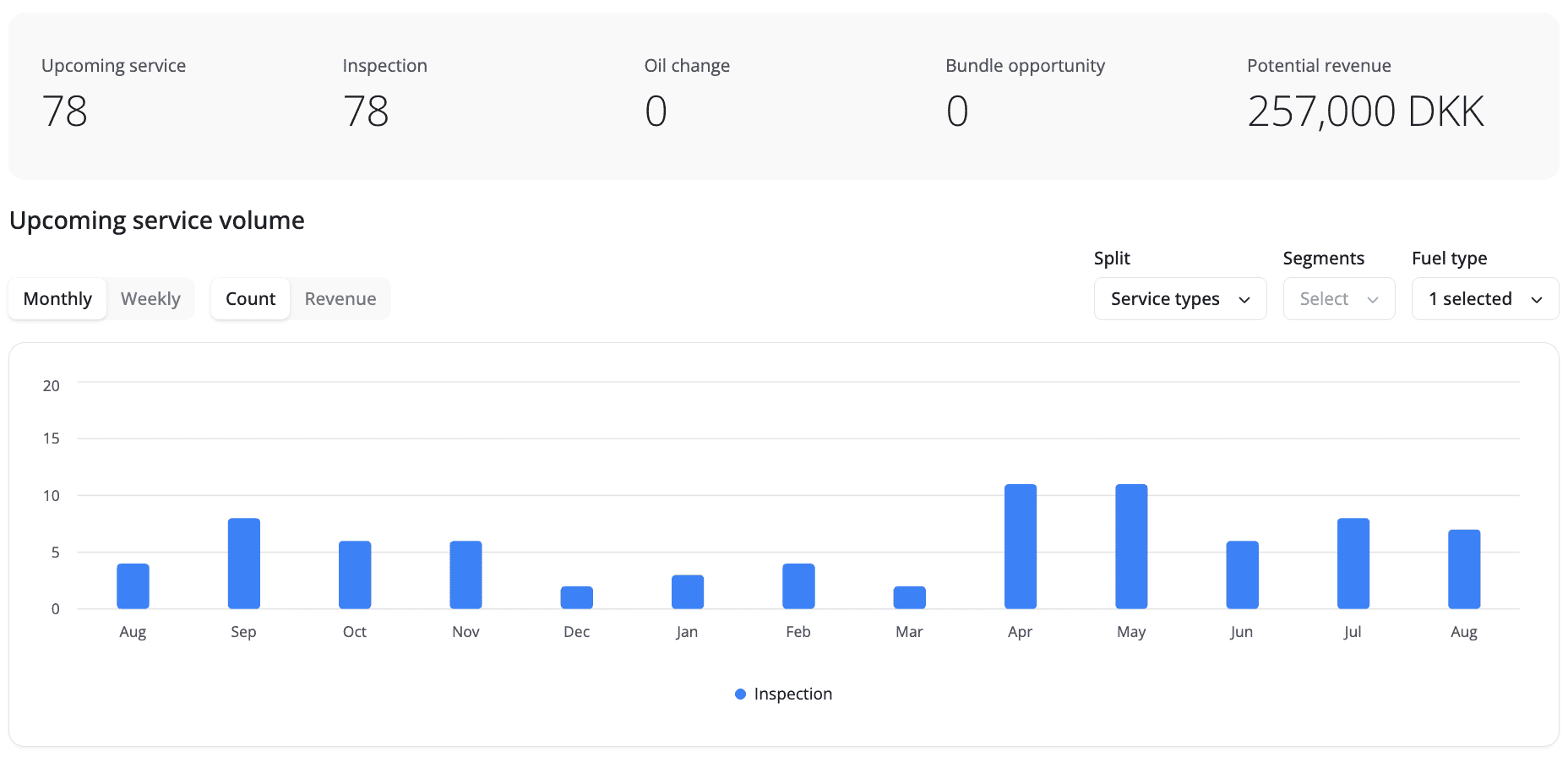
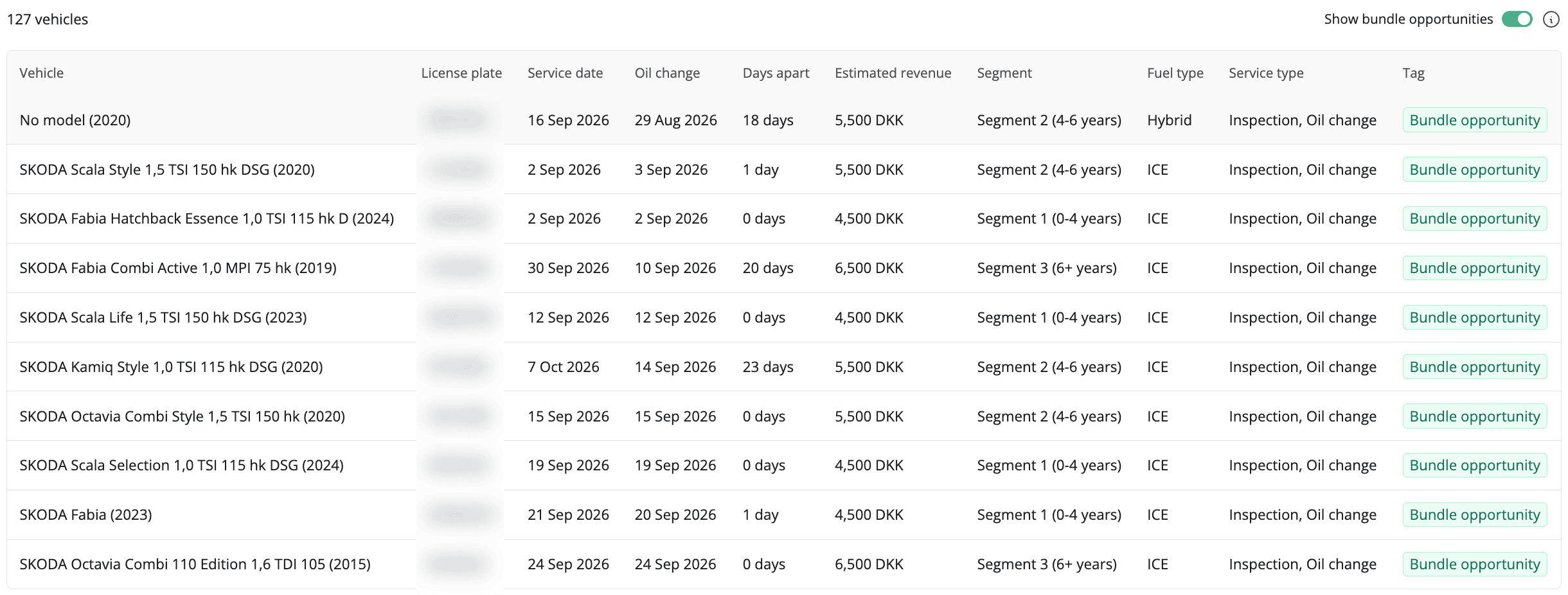
When two jobs fall close together, the vehicle picks up a bundle opportunity tag. The list also shows how many days apart the two dates sit. Close to a quarter of the vehicles in the view below are tagged. Say an inspection falls on September 2 and an oil change on September 3. That should be one visit rather than two separate trips, which is easier for the customer to accept and secures both jobs in one booking instead of leaving the second to chance.

Revenue estimates run on each workshop’s own pricing. The figure on screen reflects what that workshop earns from the work ahead. Until someone enters those prices, the page shows volume only. Clicking a bar in the chart also filters the list down to that week. A forecast tells the workshop what is coming. The filtered list shows which customers to contact.
Reaching out before the warranty ends
The warranty still ends. What changes is whether the dealership sees it coming.
Predicted service puts that date on the schedule weeks ahead, which is enough time to make the call that keeps the car.